
Polycystic Ovary Syndrome (PCOS) is one of the most common endocrine disorders in women, affecting nearly 1 in 10 reproductive-age women. But despite how common it is, PCOS is still widely misunderstood. Many women receive only partial explanations—often focused on irregular periods or fertility—without a comprehensive understanding of the metabolic, inflammatory, and hormonal imbalances that drive the condition.
At Longevity Health Clinic, we approach PCOS through a functional, root-cause lens. PCOS is not just a reproductive issue; it is a complex metabolic and inflammatory condition that affects insulin sensitivity, hormones, mental health, long-term disease risk, and overall quality of life. And while medications such as metformin or oral contraceptives are sometimes helpful, lasting improvement comes from targeted lifestyle interventions that address the underlying physiology.
This guide breaks down why PCOS develops, what symptoms to look for, its long-term health implications, and—most importantly—the evidence-based strategies that help women regain metabolic stability, lower inflammation, improve hormonal balance, and optimize longevity.
PCOS is not caused by a single gene or hormone; it emerges from a web of interconnected physiologic factors. The most common root drivers include:
Up to 70% of women with PCOS have some degree of insulin resistance. Elevated insulin:
Insulin resistance is both a cause and a consequence of PCOS, which is why metabolic optimization is central to treatment.
Higher levels of testosterone and DHEA-S can lead to:
Androgens also alter follicular development, leading to the classic “string of pearls” appearance on ultrasound.
Women with PCOS often show elevated inflammatory markers, including CRP, interleukins, and oxidative stress levels. Inflammation worsens insulin resistance and disrupts hormone signaling.
The hypothalamic–pituitary–ovarian (HPO) axis often becomes imbalanced, with elevated LH relative to FSH, impairing ovulation.
Nutrition, chronic stress, sedentary behavior, endocrine-disrupting chemicals, and poor sleep all contribute to the development and progression of PCOS.
PCOS is a metabolic-hormonal condition deeply influenced by lifestyle—and therefore highly responsive to lifestyle-based treatment.
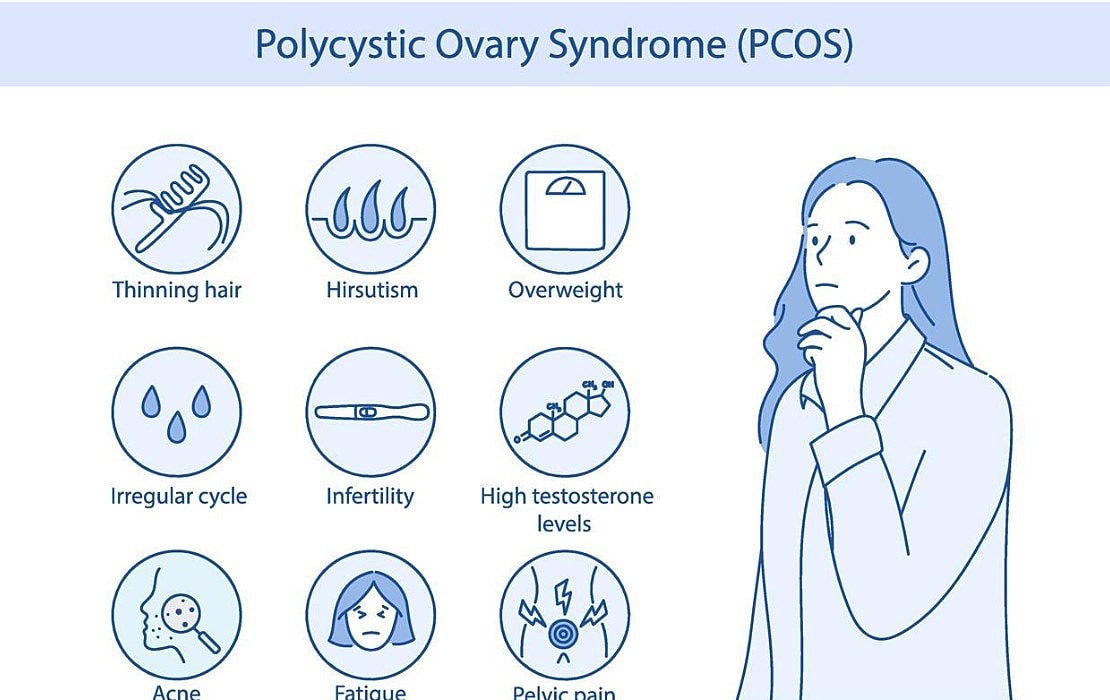
While symptoms vary widely, the most common include:
Some women experience only metabolic symptoms and have regular cycles—another reason PCOS is often under-diagnosed.
Without proper treatment, PCOS increases risk for multiple chronic diseases:
1. Type 2 Diabetes: Due to persistent insulin resistance and impaired glucose metabolism.
2. Cardiovascular Disease: PCOS is linked to higher LDL, low HDL, hypertension, endothelial dysfunction, and higher inflammatory burden.
3. Infertility: Chronic anovulation makes conception difficult—but highly treatable with metabolic optimization.
4. Endometrial Hyperplasia: Irregular shedding of the uterine lining increases long-term cancer risk.
5. Mood Disorders: Women with PCOS experience higher rates of anxiety and depression, often linked to inflammation, insulin dysregulation, and body-image challenges.
6. Sleep Disorders: Obstructive sleep apnea (even in normal-weight women) is surprisingly common.
PCOS is not a cosmetic diagnosis—it is a whole-body metabolic condition that deserves comprehensive care.
Medications can be helpful, but they cannot replace lifestyle interventions. At Longevity Health Clinic, treatment begins with the pillars that shape metabolic signaling: nutrition, exercise, stress regulation, sleep, environmental toxins, and—when appropriate—targeted pharmacology.
Nutrition powerfully influences insulin, inflammation, hormones, and ovulation. Key strategies include:
This stabilizes insulin and reduces cravings.
Regular meal timing—not necessarily intermittent fasting—is crucial for stabilizing cortisol and insulin.
Women with PCOS often do better with predictable meals rather than aggressive fasting windows.
Reducing inflammation improves insulin sensitivity and ovulatory function.
For some women, gluten or dairy exacerbate inflammation, acne, and bloating. An elimination trial can be helpful under physician guidance.
Movement improves insulin sensitivity independent of weight loss.
Even 10-minute movement “snacks” throughout the day can meaningfully improve blood sugar control.
Chronic stress increases cortisol, and excess cortisol:
This creates a vicious cycle in PCOS.
Stress is not just emotional—it is biochemical.
Poor sleep increases insulin resistance after one night and directly worsens PCOS symptoms.
Improving sleep often improves menstrual regularity and reduces cravings.
Environmental toxins can mimic hormones, disrupt receptors, and worsen metabolic health.
These small changes reduce the hormone-disrupting burden.
While our clinic prioritizes lifestyle first, medications can be valuable when used intentionally:
Metformin: Improves insulin sensitivity and reduces androgen levels.
Inositol (Myo + D-Chiro Combination): A well-supported supplement that mimics insulin signaling and may improve cycle regularity.
For women with obesity or significant insulin resistance, GLP-1s can:
These should always be paired with nutrition and movement strategies—not used in isolation.
Manage symptoms but do not treat root causes. Best used strategically and with informed consent.
PCOS is a complex but highly treatable condition. When addressed through an integrated lens—targeting insulin resistance, inflammation, stress physiology, and environmental exposures—women can experience remarkable improvement in energy, cycles, mood, metabolism, and long-term disease risk.
At Longevity Health Clinic, we work closely with women to build personalized plans that combine lifestyle strategies with precision diagnostics and appropriate medical therapies. If you're struggling with PCOS or suspect you may have it, you don’t need to navigate it alone—meaningful improvement is absolutely possible.