


Published
13 minute read
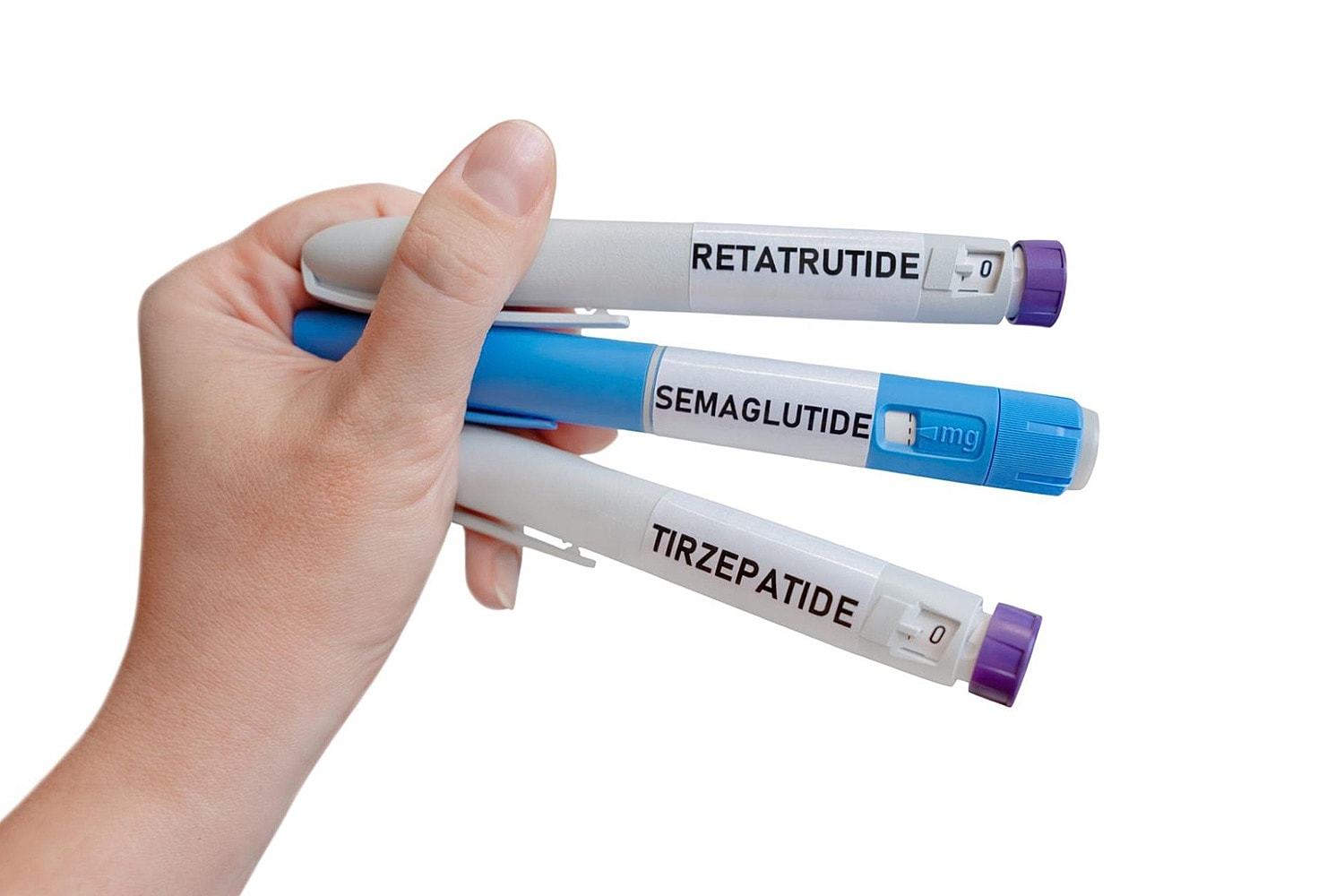
Retatrutide is one of the most exciting medications currently being studied for obesity, metabolic disease, and fatty liver disease. While medications like semaglutide and tirzepatide have already transformed the way we treat weight loss and insulin resistance, retatrutide represents the next major step in this field.
The reason is simple: retatrutide does more than activate GLP-1.
Semaglutide is a GLP-1 receptor agonist. Tirzepatide is a dual GIP/GLP-1 receptor agonist. Retatrutide is a triple agonist, meaning it activates GIP, GLP-1, and glucagon receptors. That third component — glucagon receptor activity — is one of the main reasons retatrutide is so interesting. It may not only reduce appetite and improve insulin sensitivity, but also increase energy expenditure and promote liver fat oxidation.
In other words, retatrutide is not simply “another GLP-1.” It is a more metabolically expansive medication, designed to affect appetite, weight, glucose metabolism, liver fat, and energy balance through multiple hormone pathways.
Retatrutide, also known as LY3437943, is an investigational once-weekly injectable medication being developed by Eli Lilly. It is currently not FDA-approved, but it is in advanced clinical development.
Retatrutide is often described as a “triple hormone receptor agonist” because it activates three metabolic hormone receptors: GIP, GLP-1, and glucagon. This makes it different from semaglutide, which works primarily through GLP-1, and tirzepatide, which works through GIP and GLP-1.
GLP-1 activation helps reduce appetite, slow gastric emptying, improve satiety, and support glucose control. GIP activation appears to enhance weight-loss and metabolic effects when combined with GLP-1. Glucagon receptor activation is the distinctive third pathway in retatrutide. While glucagon is often thought of as a hormone that raises blood sugar, glucagon signaling also plays an important role in hepatic fat metabolism, fatty acid oxidation, and energy expenditure.
That is why retatrutide is so compelling. It combines the appetite and glucose benefits of incretin therapy with a stronger signal toward energy expenditure and liver fat reduction.
Traditional GLP-1 medications, such as semaglutide, primarily work by mimicking glucagon-like peptide-1. This helps patients feel full sooner, reduces appetite, improves glucose control, and often leads to significant weight loss.
For many patients, GLP-1 medications are extremely effective. They can reduce cravings, decrease food noise, improve blood sugar, and support meaningful fat loss when paired with nutrition, strength training, sleep, and lifestyle changes.
But GLP-1 medications are still mostly appetite- and satiety-driven. They help people eat less and improve metabolic control, but they do not directly activate the same broader three-hormone system as retatrutide.
Retatrutide includes GLP-1 activity, but adds GIP and glucagon receptor activity. This is why the weight-loss results have been so impressive. It appears to act not only by reducing food intake, but also by increasing energy expenditure and improving liver fat metabolism. In preclinical models, retatrutide promoted weight loss by reducing food intake and increasing energy expenditure compared with calorie intake-matched animals, suggesting effects beyond appetite reduction alone.
That difference matters clinically. A medication that reduces appetite is powerful. A medication that reduces appetite while also improving liver fat oxidation, visceral fat, insulin resistance, and energy expenditure may be even more powerful.
Tirzepatide, sold under brand names such as Mounjaro and Zepbound, is a dual GIP/GLP-1 receptor agonist. It has been a major advance because it generally produces more weight loss than earlier GLP-1-only medications.
Retatrutide takes that dual-agonist concept one step further by adding glucagon receptor activity.
This is the defining difference. Tirzepatide activates GIP and GLP-1. Retatrutide activates GIP, GLP-1, and glucagon.
That glucagon component appears especially relevant for fatty liver, visceral adiposity, and energy expenditure. In the retatrutide MASLD trial, researchers specifically noted that the additional liver fat reduction seen with retatrutide compared with GLP-1 mono-agonists and tirzepatide may be related to greater weight loss, direct hepatic effects of glucagon receptor agonism, or both. They also noted that glucagon activity may reduce liver fat by stimulating hepatic fatty acid oxidation and reducing hepatic lipogenesis.
For patients with obesity, insulin resistance, fatty liver, elevated triglycerides, and visceral adiposity, that distinction is clinically important. Retatrutide is not just about the number on the scale. Its mechanism is highly relevant to the metabolic complications that often travel with weight gain.
The phase 2 obesity trial published in The New England Journal of Medicine showed some of the strongest weight-loss results reported for a medication at the time. In adults with obesity or overweight without diabetes, retatrutide produced dose-dependent weight loss. At 24 weeks, the highest doses produced major reductions in body weight, and by 48 weeks the 12 mg dose produced an average weight reduction of 24.2%.
That magnitude is important. A 24% average weight reduction begins to approach the level of weight loss historically associated with bariatric procedures, though surgery and medication are not the same intervention and should not be directly equated too casually.
Even more impressive, the weight-loss curve in the phase 2 trial did not appear to fully plateau by the end of the study. That suggests longer treatment may produce even greater results in some patients.
That appears to be exactly what later phase 3 data have begun to show. In December 2025, Eli Lilly announced positive topline results from the phase 3 TRIUMPH-4 trial in adults with obesity or overweight and knee osteoarthritis. Retatrutide lowered body weight by up to an average of 28.7%, or 71.2 pounds, at 68 weeks, while also improving knee osteoarthritis pain and physical function.
This is a major result. It reinforces the idea that retatrutide may become one of the most powerful medications in the obesity-treatment landscape.
Retatrutide has also been studied in people with type 2 diabetes. In a phase 2 trial published in The Lancet, retatrutide showed clinically meaningful improvements in glycemic control along with robust reductions in body weight. The safety profile was described as consistent with GLP-1 receptor agonists and GIP/GLP-1 receptor agonists.
This matters because many patients with type 2 diabetes need more than glucose lowering. They also need weight reduction, improvement in insulin resistance, lower visceral fat, better liver health, and reduction in cardiovascular risk factors.
Older diabetes medications often focused primarily on blood sugar numbers. Modern incretin-based medications have changed the conversation. Retatrutide may extend that shift further by targeting obesity, glucose control, hepatic fat, and energy balance at the same time.
For patients with type 2 diabetes, prediabetes, metabolic syndrome, insulin resistance, fatty liver, or obesity-related cardiovascular risk factors, that integrated mechanism is highly relevant.
The liver-fat data may be one of the most exciting parts of the retatrutide story.
In a randomized phase 2a substudy published in Nature Medicine, retatrutide was evaluated in participants with obesity and metabolic dysfunction-associated steatotic liver disease, or MASLD. Liver fat was measured using MRI-PDFF, a highly precise imaging-based method.
The results were striking. At 24 weeks, relative liver fat reductions were significantly greater for all retatrutide doses compared with placebo. The 8 mg and 12 mg doses reduced liver fat by approximately 81.4% and 82.4%, respectively, at 24 weeks. At 48 weeks, the 12 mg dose reduced liver fat by 86.0%.
Even more importantly, more than 85% of participants in the two highest dose groups achieved resolution of hepatic steatosis, defined as liver fat below 5%. The authors noted that the 86% relative liver fat reduction with retatrutide 12 mg at 48 weeks was among the largest treatment effects reported so far.
This is where retatrutide really separates itself mechanistically from GLP-1-only and GIP/GLP-1 medications. In the same paper, the authors noted that reported liver fat reductions with GLP-1 mono-agonists and tirzepatide were lower than those observed with retatrutide, with examples ranging from 32% after 24 weeks with dulaglutide, 47% after 52 weeks with tirzepatide, and approximately 50% after 72 weeks with semaglutide.
That does not mean retatrutide is “better” for every patient in every situation. But for fatty liver physiology, the glucagon receptor component appears highly relevant.
The word “glucagon” can be confusing because many people associate glucagon only with raising blood sugar. But glucagon biology is more nuanced than that.
In the context of retatrutide, glucagon receptor activation appears to contribute to increased energy expenditure and liver fat metabolism. The MASLD study authors noted that glucagon activity may reduce liver fat by stimulating hepatic fatty acid oxidation and reducing hepatic lipogenesis. They also observed dose-related increases in beta-hydroxybutyrate, a biomarker of fatty acid oxidation, with retatrutide doses of 4 mg and higher.
That is one of the most important distinctions between retatrutide and current GLP-1/GIP medications. GLP-1 and GIP help regulate appetite, satiety, insulin secretion, and metabolic control. Glucagon receptor activity adds a stronger hepatic and energy-expenditure dimension.
This is why retatrutide may be especially relevant for patients whose weight issues are tied to visceral fat, fatty liver, insulin resistance, elevated triglycerides, and metabolic syndrome. It is not only targeting appetite. It is targeting metabolic dysfunction more broadly.
The most obvious outcome with retatrutide is weight loss, but the metabolic effects go beyond scale weight.
In the phase 2 obesity and MASLD data, retatrutide treatment was associated with improvements in blood pressure, lipids, glycemia, liver fat, abdominal fat, insulin sensitivity, and markers related to MASH biology. In the MASLD analysis, higher doses reduced markers of insulin resistance, including fasting insulin, fasting C-peptide, and HOMA2-IR, by up to 50% or more from baseline. Fasting triglycerides were reduced by more than 40% with the 8 mg and 12 mg doses at 48 weeks.
This is clinically meaningful because many patients do not simply need to “lose weight.” They need to reverse the metabolic environment that drives cardiovascular disease, fatty liver, diabetes progression, chronic inflammation, and long-term health decline.
A medication that reduces body weight while also improving liver fat, visceral adiposity, triglycerides, blood pressure, and insulin sensitivity has major implications for preventive medicine and longevity-focused care.
The phase 3 TRIUMPH-4 results also raise an important point about obesity-related joint disease. Retatrutide was studied in adults with obesity or overweight and knee osteoarthritis, and the trial reported both substantial weight loss and meaningful improvement in pain and physical function. At 68 weeks, retatrutide reduced body weight by up to 28.7% and reduced WOMAC pain scores by up to 75.8%.
This does not mean retatrutide directly regenerates cartilage or reverses advanced osteoarthritis. The more likely clinical interpretation is that major weight loss reduces mechanical load, inflammatory burden, and metabolic stress on the joint. For patients with obesity-related knee osteoarthritis, that can translate into meaningful improvement in pain and mobility.
This is important because musculoskeletal pain often limits exercise, and limited exercise worsens weight gain and insulin resistance. A medication that helps break that cycle can have benefits that extend beyond body composition.
The most common side effects reported with retatrutide are similar to other incretin-based therapies. Gastrointestinal symptoms are the most common, especially during dose escalation. These may include nausea, vomiting, diarrhea, constipation, reflux, abdominal discomfort, reduced appetite, and early fullness.
In Lilly’s phase 2 obesity announcement, the safety profile was described as similar to other incretin-based therapies, with gastrointestinal side effects generally mild to moderate and usually occurring during dose escalation.
As with any medication in this class, patient selection matters. Patients with a history of pancreatitis, gallbladder disease, severe GI motility disorders, significant malnutrition risk, eating disorders, complex endocrine conditions, or major medication interactions need individualized assessment. Retatrutide is also still investigational and not FDA-approved, so it should not be obtained from unregulated online sources or “research peptide” vendors.
This point is especially important because interest in retatrutide is already high despite the medication not yet being approved. Patients should be very cautious about compounded, gray-market, or research-use products being marketed online. Product quality, sterility, dose accuracy, and safety cannot be assumed outside legitimate medical and regulatory channels.
If approved, retatrutide may be especially useful for patients with obesity and significant metabolic complications. This includes patients with insulin resistance, prediabetes, type 2 diabetes, fatty liver disease, elevated triglycerides, visceral adiposity, metabolic syndrome, hypertension, or obesity-related joint pain.
It may also become highly relevant for patients who have had an incomplete response to GLP-1-only therapy or dual GIP/GLP-1 therapy. Some patients respond beautifully to semaglutide or tirzepatide. Others lose less weight than expected, plateau early, or continue to have significant liver fat, visceral adiposity, or metabolic dysfunction. Retatrutide’s triple-agonist mechanism may eventually offer a more powerful option for that group.
That said, medication choice should not be based only on maximum weight loss. The right medication depends on the patient’s goals, medical history, tolerability, metabolic profile, contraindications, cost, access, and long-term plan.
Retatrutide is not just another GLP-1 medication. It is a triple GIP, GLP-1, and glucagon receptor agonist, and that difference matters.
Compared with GLP-1-only medications, retatrutide adds GIP and glucagon activity. Compared with tirzepatide, retatrutide adds glucagon receptor activation. That third pathway appears especially important for energy expenditure, hepatic fatty acid oxidation, liver fat reduction, and broader metabolic effects.
The research results are impressive. In phase 2 obesity data, retatrutide produced up to 24.2% mean weight loss at 48 weeks. In phase 3 topline data, it produced up to 28.7% mean weight loss at 68 weeks in adults with obesity or overweight and knee osteoarthritis. In MASLD research, retatrutide reduced liver fat by up to 86% at 48 weeks, with hepatic steatosis resolving in more than 85% of participants in the two highest dose groups.
For patients focused on metabolic health, fatty liver, insulin resistance, obesity, cardiovascular risk reduction, and long-term health optimization, retatrutide may become one of the most important medications in the next generation of obesity and metabolic therapy.
At Longevity Health Clinic, we follow this research closely because the future of weight-loss medicine is not just about appetite suppression. It is about improving metabolic health at a deeper level: reducing visceral fat, improving insulin sensitivity, lowering liver fat, protecting cardiovascular health, improving mobility, and helping patients build a healthier long-term trajectory.
If you are interested in GLP-1 medications, GLP-1/GIP medications, or emerging treatments like retatrutide, Longevity Health Clinic can help you understand your options and build a physician-guided plan for weight loss, metabolic health, and long-term prevention.