


Published
17 minute read
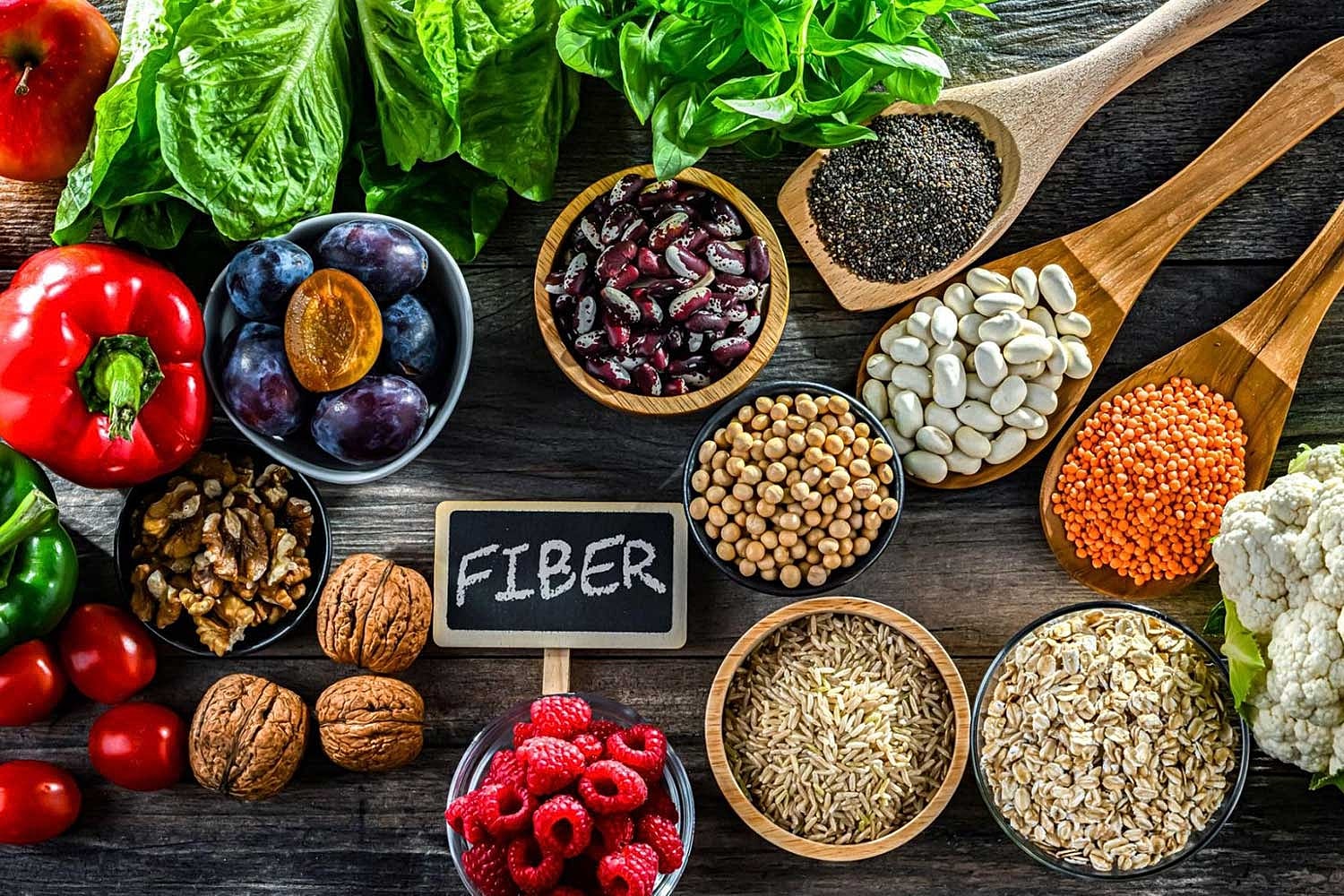
Most people think about fiber only in terms of bowel movements. If they are constipated, they are told to “eat more fiber.” If they are trying to lose weight, they may hear that fiber helps them feel full. Those benefits are real, but they only scratch the surface.
Fiber is one of the most important tools we have for supporting the gut microbiome — the trillions of bacteria, fungi, and other microorganisms that live in the digestive tract and influence digestion, inflammation, immune balance, metabolic health, hormone metabolism, and even food tolerance.
At Longevity Health Clinic, we view fiber as a foundational gut-health intervention. It is not trendy. It is not complicated. But it is powerful. When used correctly, fiber helps feed beneficial bacteria, improve microbial diversity, support the gut lining, regulate bowel function, improve blood sugar response, support cholesterol metabolism, and reduce inflammation in the gut environment.
For many patients with bloating, constipation, loose stools, food sensitivities, IBS-type symptoms, dysbiosis, or inflammation, the question is not just “Do you need more fiber?” The better question is: What kind of fiber does your gut need, and what does your microbiome currently look like?
That is where testing such as the GI-MAP can be helpful.
Your gut contains trillions of beneficial bacteria, often called commensal bacteria. These organisms are not passive passengers. They help digest food, regulate immune function, maintain the gut barrier, influence inflammation, and produce important compounds that affect the entire body.
One of the most important things these bacteria need is fiber.
Certain fibers act as prebiotics, meaning they feed beneficial bacteria. When these bacteria ferment prebiotic fibers, they produce short-chain fatty acids such as butyrate. Butyrate is especially important because it helps nourish colon cells, supports gut lining integrity, and helps regulate immune balance in the gut.
The attached gut-health diet guide summarizes this well: prebiotic fibers nourish beneficial gut bacteria and help them produce short-chain fatty acids, including butyrate, which support gut lining repair and immune balance. It also emphasizes that diet is one of the most powerful tools for restoring a healthy gut environment.
This is why fiber is not just about stool bulk. It is about changing the ecosystem of the gut.
A low-fiber diet tends to starve beneficial bacteria. Over time, this can contribute to lower microbial diversity, weaker gut barrier function, increased inflammation, constipation, worsened blood sugar regulation, and greater vulnerability to dysbiosis. Dysbiosis simply means an imbalance in the gut microbiome — often involving low beneficial bacteria, overgrowth of less desirable organisms, or both.
A fiber-rich diet does the opposite. It gives beneficial microbes the raw material they need to grow, produce anti-inflammatory compounds, and support a healthier intestinal environment.
One of the biggest mistakes people make is thinking about fiber as a single thing. Fiber is actually a broad category, and different fibers have different effects.
Some fibers help stool hold water and improve bowel regularity. Some feed specific beneficial bacteria. Some help regulate cholesterol. Some support blood sugar control. Some help increase short-chain fatty acid production. Some are gentle and well tolerated, while others can cause gas and bloating if introduced too quickly.
That is why fiber diversity matters.
A healthy gut is not built by eating one high-fiber food every day. It is built by regularly eating a variety of vegetables, fruits, legumes, seeds, and tolerated whole-food fiber sources that provide different types of prebiotic material.
The gut-health guide highlights several key categories of prebiotic fibers, including resistant starch, inulin, beta-glucan, arabinogalactan, and xylooligosaccharides. Each has different food sources and different benefits.
Resistant starch is found in foods such as cooked-and-cooled potatoes, cooked-and-cooled rice, green bananas, lentils, beans, and overnight oats. Cooling cooked starches increases resistant starch formation, which can improve the gut-health benefits of those foods. Resistant starch is especially interesting because it supports gut lining integrity and may also help improve insulin sensitivity.
Inulin is another prebiotic fiber that feeds beneficial bacteria such as Bifidobacteria. It is found in foods such as onions, garlic, leeks, asparagus, artichokes, and chicory root. Inulin can be very useful, but it can also cause gas or bloating in sensitive patients, so it often needs to be introduced gradually.
Beta-glucan, found in oats, oat bran, barley, and certain mushrooms such as shiitake and maitake, is useful because it supports immune balance, cholesterol metabolism, and gut barrier health. Arabinogalactan, found in foods such as carrots, apples, pears, tomatoes, and radishes, supports immune tolerance and microbial diversity. Xylooligosaccharides, or XOS, are a gentler prebiotic that selectively feeds beneficial bacteria and may be better tolerated in some patients.
The practical point is simple: different fibers feed different microbial populations. A broader fiber intake usually creates a broader microbial benefit.
Fiber is one of the rare interventions that benefits multiple systems at once.
The health benefits of fiber guide notes that fiber supports digestion, blood sugar balance, heart health, and weight management. It helps maintain regular bowel movements, feeds beneficial gut bacteria, slows sugar absorption, reduces glucose spikes, improves insulin sensitivity, and can help lower cholesterol.
This is why fiber matters so much in functional and longevity medicine. Gut health is not isolated from the rest of the body. A healthier microbiome can support better metabolic health, lower inflammation, improved elimination, better immune regulation, and a stronger gut barrier.
For patients with insulin resistance, prediabetes, obesity, fatty liver, high cholesterol, inflammatory symptoms, or digestive complaints, fiber is often one of the most important “first principles” interventions.
Soluble fiber can bind water, slow digestion, improve satiety, reduce post-meal glucose spikes, and help lower LDL cholesterol. Insoluble fiber adds bulk to stool and helps support regular bowel movements. Fermentable prebiotic fibers feed bacteria and increase production of short-chain fatty acids. These mechanisms overlap, but they are not identical, which is why using multiple fiber sources is usually better than relying on one.
Most adults do not get enough fiber.
The attached fiber guide recommends approximately 25 grams of fiber per day for women and 35 grams per day for men, along with about 1.5–2 liters of water per day. It also recommends using varied fiber sources because different fibers improve bowel function through different mechanisms.
That water recommendation matters. If someone increases fiber without enough fluid, constipation and bloating can worsen. Fiber needs water to move well through the digestive tract.
A reasonable goal for many patients is not to jump from 10 grams of fiber per day to 35 grams overnight. That often backfires. Instead, the better approach is to increase gradually, observe symptoms, and personalize the plan.
For example, someone with constipation may benefit from psyllium, chia, vegetables, and adequate water. Someone with loose stools may need soluble fiber and gut-calming foods. Someone with bloating or SIBO may need a slower, more selective approach because certain fermentable fibers can aggravate symptoms early on.
Fiber is powerful, but it should be individualized.
The best fiber plan starts with food.
Vegetables are the foundation. The gut-health diet guide recommends aiming for at least 5–8 servings of vegetables daily with a wide variety of colors. Vegetables provide natural fibers, polyphenols, vitamins, and minerals that support beneficial microbes and gut repair. Examples include leafy greens, cruciferous vegetables, root vegetables, and squash.
Polyphenols deserve special attention. These are plant compounds that help shape the microbiome and support beneficial bacteria. Deeply colored plant foods — greens, berries, herbs, spices, colorful vegetables, and certain fruits — provide more than just fiber. They provide chemical signals that influence microbial balance.
For patients with gluten or wheat sensitivity, fiber planning needs to be more careful. Many standard fiber recommendations include wheat-based foods, but those are not appropriate for everyone. Gluten-free fiber sources such as vegetables, chia, flax, legumes if tolerated, oats certified gluten-free when appropriate, psyllium, fruit, and resistant starch sources can still provide excellent microbiome support.
Some patients benefit from fiber supplementation, especially when they are not yet able to reach their target through food alone or when bowel function needs more direct support.
The gut-health diet guide lists psyllium husk and oat bran as helpful options. Psyllium can improve stool consistency, feed beneficial bacteria, and is often well tolerated. Oat bran is rich in beta-glucan and can support both cholesterol and gut health. The guide emphasizes starting low and increasing slowly to avoid bloating.
The fiber guide also lists common fiber supplements such as calcium polycarbophil, methylcellulose, psyllium, wheat dextrin, and Thorne FiberMend, noting that FiberMend is a preferred prebiotic fiber option for gut health, blood sugar support, regularity, and digestive function.
Fiber supplements are tools. They can be very helpful, but they do not replace a high-quality diet. A supplement may improve stool consistency or feed certain bacteria, but vegetables, fruits, legumes, seeds, herbs, and colorful plant foods provide a broader range of fibers, polyphenols, and micronutrients.
The best plan usually combines food-first fiber diversity with targeted supplementation when needed.
Gut health is not only about adding good foods. It is also about reducing foods that feed the wrong organisms or promote inflammation.
The gut-health diet guide specifically recommends reducing or eliminating added sugars, sweets, desserts, candy, sugary drinks, white bread, pastries, crackers, refined grains, and processed snacks. It explains that sugar can feed harmful bacteria and yeast, refined carbohydrates can increase inflammation, and these foods can impair gut barrier healing.
This is clinically important. Patients often want to know which probiotic or supplement to take, but the daily diet may be pushing the microbiome in the wrong direction. A high-sugar, low-fiber diet tends to promote dysbiosis. A high-fiber, plant-rich, lower-sugar diet tends to support microbial resilience.
For many patients, the most effective gut-health strategy is not complicated: increase fiber diversity, increase vegetables, reduce sugar and refined carbohydrates, improve protein quality, hydrate well, and personalize based on symptoms and testing.
Diet is foundational, but sometimes symptoms persist despite good nutrition. This is where stool testing can help clarify what is happening in the gut.
The GI-MAP is a DNA-based stool test that uses quantitative PCR to evaluate microbes in the gastrointestinal tract. In the sample report, results are reported as genome equivalents per gram of stool, which estimates the number of microbes measured per gram based on qPCR analysis. The report also explains that results below detectable limits are shown as “<dl.”
At Longevity Health Clinic, the GI-MAP can be useful because it does not just say whether the gut is “good” or “bad.” It provides a structured look at several clinically relevant categories.
It can evaluate bacterial, parasitic, and viral pathogens that are commonly associated with gastroenteritis. In the sample report, the pathogen section includes organisms such as Campylobacter, C. difficile toxins A and B, pathogenic E. coli strains, Salmonella, Vibrio cholerae, Yersinia enterocolitica, Cryptosporidium, Entamoeba histolytica, Giardia, adenovirus, and norovirus. The report also notes that not every positive finding causes symptoms, because immune function, digestive function, microbiome balance, pathogen virulence, and transient exposure all influence whether a person becomes symptomatic.
It can also assess H. pylori and related virulence factors. This matters for patients with reflux, gastritis-type symptoms, upper abdominal discomfort, nausea, iron deficiency, or ulcer risk. The sample GI-MAP report includes H. pylori testing and virulence factors such as cagA, vacA, babA, and others.
One of the most useful sections for fiber and microbiome planning is the commensal and keystone bacteria section. The sample report includes important organisms such as Bacteroides fragilis, Bifidobacterium, Enterococcus, Escherichia, Lactobacillus, Enterobacter, Akkermansia muciniphila, Faecalibacterium prausnitzii, and Roseburia, along with bacterial phyla such as Bacteroidetes, Firmicutes, and the Firmicutes:Bacteroidetes ratio.
This is where fiber becomes more personalized. If beneficial bacteria are low, the plan may focus on increasing specific prebiotic fibers, polyphenols, resistant starch, and targeted supplementation. If butyrate-associated organisms such as Faecalibacterium or Roseburia are low, we may place more emphasis on fibers that support short-chain fatty acid production. If Akkermansia is low, we may think about polyphenol-rich foods, metabolic health, fasting patterns, and overall gut barrier support.
The GI-MAP also evaluates opportunistic and overgrowth microbes. In the sample report, this includes organisms such as Pseudomonas, Staphylococcus, Streptococcus, Klebsiella, Citrobacter, Proteus, Fusobacterium, Prevotella, Candida, and others.
This matters because symptoms can come from different patterns. One patient may have low beneficial bacteria. Another may have overgrowth of opportunistic bacteria. Another may have yeast findings. Another may have inflammatory markers or impaired digestion. The treatment strategy should not be identical for all of them.
The GI-MAP also includes intestinal health markers that help characterize digestion, inflammation, immune response, and gut barrier patterns.
In the sample report, intestinal health markers include steatocrit, elastase-1, beta-glucuronidase, occult blood/FIT, secretory IgA, anti-gliadin IgA, eosinophil activation protein, calprotectin, gluten peptide, and zonulin.
These markers can help answer clinically useful questions.
Is pancreatic enzyme output adequate? Elastase-1 can help assess digestive enzyme sufficiency. Is there evidence of fat malabsorption? Steatocrit can help screen for that pattern. Is there intestinal inflammation? Calprotectin can help identify inflammatory activity that may need further evaluation. Is there immune activation in the gut? Secretory IgA, anti-gliadin IgA, and eosinophil activation protein may provide clues. Is there evidence of occult blood? FIT can help identify bleeding that requires appropriate medical follow-up. Is there concern for increased intestinal permeability? Zonulin is sometimes used as an add-on marker in that context.
The sample report also includes antibiotic resistance genes, including H. pylori-related resistance genes and universal antibiotic resistance genes. It notes that detection of resistance-associated genes may not always confer phenotypic drug resistance and that detected genes cannot necessarily be associated with specific microbes.
This is one reason testing should be interpreted by a clinician. The value of the GI-MAP is not simply the list of organisms. The value is understanding how the pattern fits with symptoms, history, diet, medications, immune status, and clinical risk.
Fiber recommendations are more effective when they are matched to the patient.
For a patient with low beneficial bacteria and low fiber intake, the plan may begin with gradual fiber expansion: more vegetables, resistant starch, legumes if tolerated, chia or psyllium, and prebiotic fibers. For a patient with bloating and suspected SIBO-type symptoms, the plan may need to start more gently, because rapidly increasing fermentable fiber can worsen gas and discomfort. For a patient with constipation, psyllium, chia, hydration, magnesium, movement, and stool-pattern tracking may be important. For a patient with inflammation or positive pathogen findings, the first priority may be addressing the underlying driver before pushing aggressive prebiotic intake.
The GI-MAP helps us see what kind of gut environment we are working with. It can identify whether the issue is low commensal bacteria, overgrowth patterns, pathogens, yeast, inflammation, immune activation, digestive insufficiency, or a combination of factors.
Then fiber becomes part of a targeted strategy instead of generic advice.
This is the difference between saying, “Eat more fiber,” and saying, “Your microbiome pattern suggests we need to rebuild beneficial bacteria, support butyrate production, improve stool consistency, reduce refined carbohydrates, and introduce prebiotics gradually based on your tolerance.”
That level of personalization is where functional medicine can be especially helpful.
For most people, the first step is to increase fiber slowly and consistently. A practical starting point is adding one additional serving of vegetables per day, then gradually increasing toward the 5–8 servings per day recommended in the gut-health guide.
From there, patients can add specific fiber categories. Resistant starch can come from cooked-and-cooled potatoes, rice, lentils, beans, or overnight oats. Beta-glucan can come from oats, oat bran, barley, or mushrooms. Gentle supplemental fibers such as psyllium may help bowel regularity and stool consistency. Prebiotic blends may be useful when tolerated.
The key is to go slowly. Gas and bloating do not always mean fiber is “bad.” Sometimes they mean the gut microbiome is adapting. But symptoms matter, and the plan should be adjusted if discomfort is significant.
At the same time, reducing added sugar and refined carbohydrates is essential. A gut-healing diet should not feed dysbiosis while trying to rebuild beneficial bacteria. Adding fiber while continuing a high-sugar, processed diet is less effective than changing both sides of the equation.
Fiber is one of the most important tools for building a healthier gut microbiome. It feeds beneficial bacteria, supports short-chain fatty acid production, improves bowel regularity, strengthens gut barrier function, improves blood sugar regulation, supports cholesterol metabolism, and helps reduce inflammation in the gut environment.
But the best fiber plan is not the same for everyone.
Some patients need more resistant starch. Others need soluble fiber. Others need prebiotics introduced slowly. Others need to address pathogens, dysbiosis, inflammation, low digestive enzymes, or immune activation before they can tolerate a more aggressive fiber plan.
That is where the GI-MAP can be valuable. By characterizing commensal and keystone bacteria, identifying overgrowth patterns, screening for pathogens, evaluating H. pylori, and assessing intestinal health markers, the GI-MAP gives us a more detailed picture of the gut ecosystem. That allows us to create a more personalized plan for fiber, nutrition, supplements, gut repair, and long-term microbiome support.
At Longevity Health Clinic, we use fiber as a foundational gut-health intervention because it works with the body’s own microbial ecosystem. When combined with thoughtful testing, individualized nutrition, and targeted support, fiber can become one of the most powerful tools for restoring gut health.
If you are dealing with bloating, constipation, loose stools, IBS symptoms, food sensitivities, reflux, inflammation, or unexplained digestive issues, Longevity Health Clinic can help evaluate your microbiome and build a personalized gut-health plan using diet, fiber, targeted supplements, and advanced stool testing such as the GI-MAP.