


Published
12 minute read
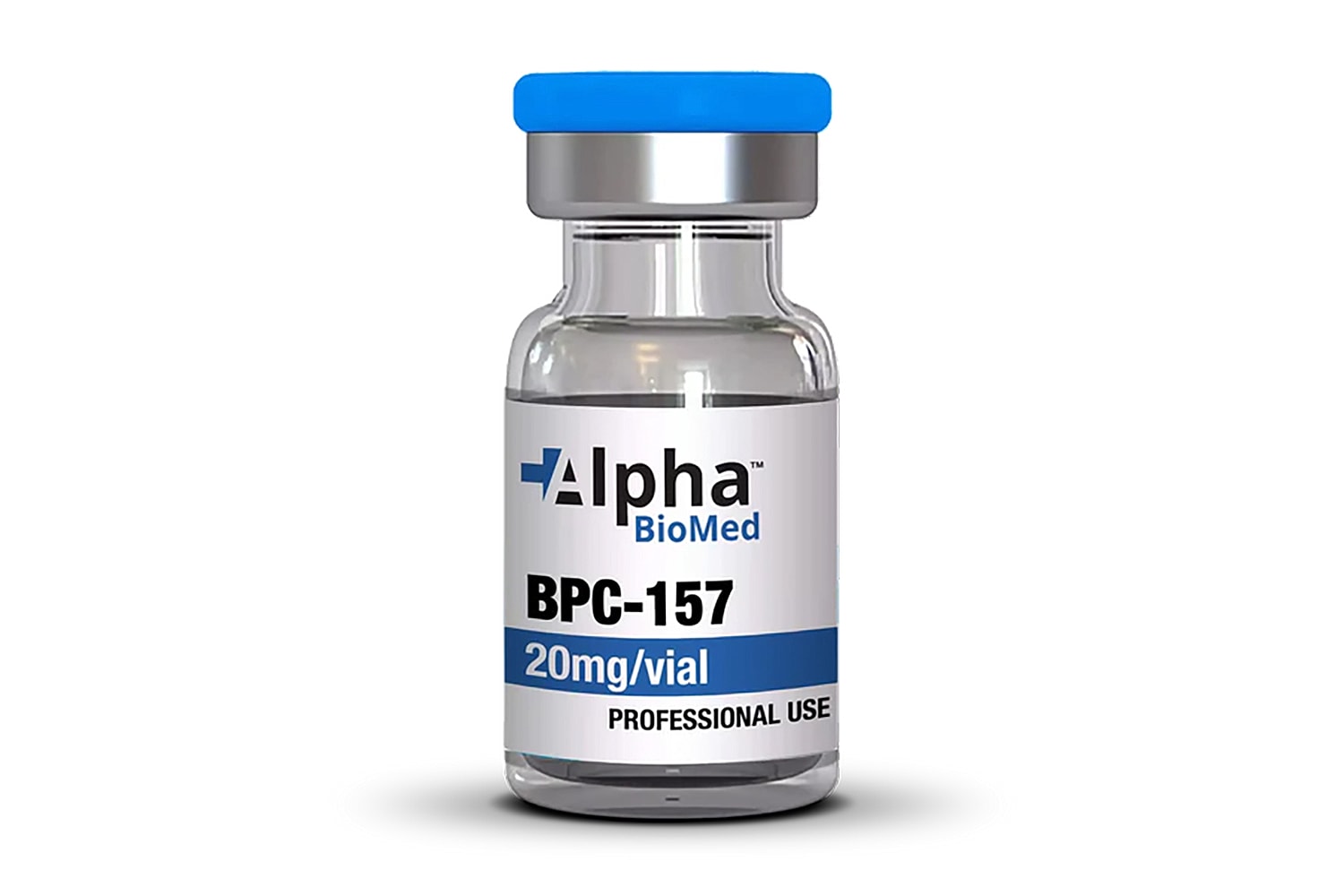
Soft-tissue injuries can be frustrating because they often linger. A tendon strain, irritated Achilles, rotator cuff flare, golfer’s elbow, plantar fascia pain, or muscle injury can interfere with training, sleep, work, and daily life for weeks or months. Even when the injury is not severe enough to require surgery, recovery can be slow, especially when tendons, ligaments, fascia, and other connective tissues are involved.
This is where BPC-157 has become one of the most interesting peptides in regenerative, functional, and performance medicine. BPC-157 has been studied extensively in preclinical models and has demonstrated meaningful effects on tissue repair, tendon and ligament healing, muscle recovery, wound healing, angiogenesis, nitric oxide signaling, inflammation modulation, and gastrointestinal mucosal protection. The strongest research base is still preclinical rather than large-scale human randomized trials, but the consistency of the findings is one reason BPC-157 has gained so much attention.
At Longevity Health Clinic, we use BPC-157 in a targeted way. I have personally used it for acute injuries and have found it effective, particularly when the injury involves soft tissue rather than advanced joint degeneration. In the right clinical context, BPC-157 can be a valuable tool for supporting recovery, improving comfort, and helping patients return to activity more effectively.
The key is matching the peptide to the right problem.
BPC-157 stands for Body Protection Compound-157. It is a synthetic peptide derived from a protective protein sequence found in gastric juice. That origin matters because BPC-157 has been studied not only for musculoskeletal repair, but also for gastrointestinal protection, gut barrier support, ulcer models, intestinal inflammation, and mucosal healing.
In regenerative and functional medicine, BPC-157 is most commonly used in two major areas: musculoskeletal recovery and gut health support. For musculoskeletal use, it is commonly considered for tendon irritation, ligament sprains, muscle strains, fascia-related pain, overuse injuries, and joint-adjacent soft-tissue pain. For gastrointestinal use, it is commonly discussed for gut irritation, gastritis-type symptoms, reflux-type irritation, inflammatory gut symptoms, and mucosal support.
BPC-157 is not FDA-approved for any medical condition, including soft-tissue injury, gut healing, pain, inflammation, anti-aging, or performance enhancement. The FDA lists BPC-157 among bulk drug substances that may present significant safety risks in compounding, citing concerns such as immune reactions, peptide-related impurities, and limited safety information. That regulatory status is important for patients to understand, but it should be separated from the biological research. Lack of FDA approval does not mean lack of activity. It means that BPC-157 remains outside standard FDA-approved treatment pathways and should be used thoughtfully under physician guidance.
BPC-157 is especially compelling for soft-tissue injuries because many of these injuries heal slowly. Tendons and ligaments have less robust blood supply than muscle, which can make recovery more prolonged. Healing also depends on collagen remodeling, fibroblast activity, vascular signaling, inflammation control, progressive loading, adequate protein intake, sleep, and correction of the movement pattern that caused the injury.
Research suggests that BPC-157 acts on several of these repair pathways. A 2025 review described BPC-157 as a peptide with pleiotropic beneficial effects across preclinical models of tissue injury and inflammatory bowel disease. The same review discusses its role in tissue protection, wound healing, vascular function, and inflammatory modulation.
In practical terms, this is why BPC-157 has become so popular among athletes, active adults, and patients dealing with persistent soft-tissue injuries. It is not simply a pain-relief peptide. Its main appeal is that it supports the biology of repair.
BPC-157 is best suited for injuries where the primary problem is soft-tissue damage, irritation, inflammation, or impaired healing. These are often the injuries that frustrate patients because they are painful enough to limit activity but not always severe enough to trigger aggressive treatment in the traditional medical system.
Good use cases include tendon irritation, ligament sprains, muscle strains, plantar fascia irritation, rotator cuff irritation, Achilles tendinopathy, patellar tendinopathy, tennis elbow, golfer’s elbow, and joint-adjacent soft-tissue pain. It is also useful when pain around a joint appears to be driven by surrounding tendons, ligaments, fascia, or connective tissue rather than severe damage inside the joint itself.
This distinction is important. BPC-157 tends to make the most clinical sense when the injury involves tissue that can realistically remodel and recover. A strained hamstring, irritated elbow tendon, mild ligament sprain, inflamed Achilles, or painful plantar fascia problem is very different from severe bone-on-bone osteoarthritis.
In my experience, BPC-157 is especially useful for acute and subacute injuries where the goal is to reduce pain, calm local tissue irritation, support healing, and help the patient tolerate rehabilitation and progressive loading more effectively.
BPC-157 is not the right tool for every orthopedic problem.
It should not be expected to reverse severe osteoarthritis, regrow advanced cartilage loss, correct major joint deformity, heal a complete tendon rupture without appropriate orthopedic management, or replace surgery when surgery is clearly indicated. In severe osteoarthritis, the limiting problem is often structural joint degeneration. The cartilage loss, bony change, altered joint mechanics, and chronic inflammatory environment are not the same as a tendon strain or ligament irritation.
That does not mean BPC-157 has no role around painful joints. Some patients with joint pain also have surrounding soft-tissue irritation, and that periarticular tissue may respond. But BPC-157 should not be positioned as a treatment that reverses advanced joint degeneration.
It also should not be used to avoid proper diagnosis. A severe tendon tear, fracture, infection, nerve compression, progressive weakness, unexplained swelling, or rapidly worsening pain needs appropriate evaluation. The best results occur when BPC-157 is used for the right injury, at the right time, with the right supporting plan.
One of the most cited areas of BPC-157 research is tendon healing. In a rat Achilles tendon transection model, BPC-157 improved tendon healing, including functional recovery, biomechanical strength, collagen formation, fibroblast activity, and microscopic tendon organization. This is directly relevant to why the peptide is commonly used in tendon and ligament recovery protocols.
Other musculoskeletal research has looked at ligament healing, tendon fibroblast activity, angiogenesis, and muscle injury models. A review of the BPC-157 literature references studies showing positive effects on ligament healing, tendon outgrowth, tendon fibroblast survival and migration, growth hormone receptor expression in tendon fibroblasts, and angiogenesis in muscle and tendon healing.
That matters clinically because tendon and ligament recovery depends heavily on cellular repair activity, collagen organization, vascular support, and the ability to gradually reload tissue. BPC-157 appears to influence many of the same pathways involved in that healing process.
This does not mean every patient will respond the same way. Injury severity, age, metabolic health, protein intake, sleep quality, training load, inflammation, and rehabilitation strategy all matter. But the musculoskeletal research provides a strong rationale for using BPC-157 in soft-tissue recovery protocols.
BPC-157 also has a strong gastrointestinal foundation. It was originally derived from a protective gastric peptide sequence, and much of the research has focused on mucosal protection, ulcer healing, intestinal inflammation, and gut barrier support.
A review on BPC-157 and gastric cytoprotection describes it as a stable gastric pentadecapeptide with anti-ulcer and tissue-protective effects and notes that it has been used in trials for ulcerative colitis. Research reviews also describe BPC-157’s protective effects in models involving NSAID-related gastrointestinal lesions, alcohol-related injury, perforated stomach lesions, esophagitis, fistula healing, intestinal inflammation, and other GI injury models.
This is why oral BPC-157 is commonly used in gut-focused protocols. In clinical practice, it is most often considered for patients dealing with gastritis-type irritation, reflux-type symptoms, inflammatory gut symptoms, medication-related GI irritation, intestinal permeability concerns, or gut lining support.
For gut health, oral BPC-157 is generally favored over injection because the target is gastrointestinal mucosal support rather than local tendon or ligament recovery. The patient guidance framework you provided similarly distinguishes oral protocols as more common for gut-health goals, while injectable protocols are more commonly used for soft-tissue and musculoskeletal recovery.
For musculoskeletal injuries, BPC-157 is commonly administered by subcutaneous injection. Injection may be done systemically, such as in the abdomen or thigh, or locally near the symptomatic soft-tissue region. Local injection is typically placed in the subcutaneous tissue near the injured area, not directly into a tendon, ligament, nerve, blood vessel, or joint unless a specific procedural approach is being performed by a qualified clinician.
Commonly used soft-tissue protocols include 250 mcg once daily, 500 mcg once daily, or 250 mcg twice daily. A typical course is 4–6 weeks, followed by reassessment. For chronic tendon, ligament, or soft-tissue problems, some protocols may extend to 8 weeks when there is clear benefit and good tolerance.
For gut-health protocols, oral BPC-157 is commonly used at 250–500 mcg once daily. In more symptomatic gut protocols, 500 mcg twice daily may be used. A typical gut-focused course is 4–8 weeks, followed by reassessment.
At Longevity Health Clinic, dosing and route are individualized based on the problem being treated, the patient’s medical history, risk factors, goals, and response.
BPC-157 works best when the rest of the recovery environment is strong. For musculoskeletal injuries, that means the patient still needs proper diagnosis, load management, progressive rehabilitation, adequate protein intake, high-quality sleep, and correction of the movement pattern or training error that contributed to the injury.
For example, a patient with Achilles tendinopathy may benefit from BPC-157, but they still need smart calf loading, appropriate activity modification, footwear review, and gradual return to higher-impact activity. A patient with tennis elbow may benefit from BPC-157, but they still need grip-load management, eccentric or progressive tendon loading, and correction of repetitive strain. A patient with a muscle strain may benefit from BPC-157, but tissue healing still requires time, protein, sleep, and a structured return to activity.
This is not because BPC-157 is weak. It is because tissue repair is multifactorial. The peptide can support healing biology, but the body still needs the right mechanical and nutritional environment to complete the process.
The same principle applies to gut health. Oral BPC-157 can be useful for gut mucosal support, but it should be paired with attention to food triggers, alcohol intake, NSAID use, stress physiology, microbiome health, sleep, and appropriate GI evaluation when symptoms warrant it.
When BPC-157 is well matched to the patient and the injury, expected benefits may include reduced localized discomfort, improved range of motion, better tolerance of rehabilitation exercises, improved soft-tissue recovery, and faster return to normal training or activity.
For gut-focused use, expected benefits may include reduced gut irritation, improved GI comfort, improved stool consistency, and better tolerance of a broader gut-healing protocol.
The most important point is that results depend on the clinical context. BPC-157 performs best when the problem is biologically suited to tissue repair: tendon irritation, ligament sprain, muscle strain, fascia irritation, or gut mucosal inflammation. It performs less well when the main issue is severe structural degeneration, uncontrolled overuse, poor sleep, inadequate protein intake, or a problem that requires procedural or surgical care.
BPC-157 should be used thoughtfully. Because human safety data are still limited and BPC-157 is not FDA-approved, patient selection matters.
Potential side effects may include injection-site redness, swelling, bruising, itching, tenderness, small lumps, headache, fatigue, nausea, appetite changes, abdominal discomfort, stool changes, dizziness, altered sleep, mood changes, or feeling “off.” Allergic or immune reactions are also possible, and the FDA has specifically raised concerns about immunogenicity and peptide-related impurities in compounded BPC-157.
Extra caution is appropriate in patients with active cancer, recent cancer, unexplained masses, unexplained weight loss, pregnancy, breastfeeding, known allergy to peptide products, active infection, immune compromise, significant liver or kidney disease, active inflammatory or autoimmune disease flares, unusual clotting history, uncontrolled cardiovascular disease, use of chemotherapy or immune-modifying biologic therapy, and competitive athletes subject to anti-doping rules.
Patients with significant GI red flags should not use BPC-157 as a substitute for medical evaluation. Black or tarry stool, visible blood in the stool, vomiting blood, severe abdominal pain, unexplained weight loss, persistent fever, anemia, or progressive swallowing difficulty should be evaluated appropriately.
A good candidate is someone with a clearly defined soft-tissue injury and a willingness to follow a complete recovery plan. This includes patients with acute muscle strains, tendon irritation, ligament sprains, plantar fascia irritation, Achilles tendinopathy, patellar tendinopathy, rotator cuff irritation, tennis elbow, golfer’s elbow, or localized joint-adjacent soft-tissue pain.
BPC-157 may also be appropriate for selected patients with gut irritation, inflammatory gut symptoms, gastritis-type symptoms, reflux-type irritation, or medication-related GI irritation when it is part of a broader gut-health plan.
The best candidates are patients who want to recover intelligently. They are not looking for a shortcut. They are looking for a physician-guided tool that can support tissue repair, calm inflammation, and improve recovery while they also address the fundamentals.
BPC-157 is one of the most compelling peptides in regenerative and functional medicine. The research is strongest in soft-tissue repair and gastrointestinal protection models, with evidence showing benefit in tendon healing, ligament repair, muscle injury, wound healing, angiogenesis, inflammatory modulation, and gut mucosal protection.
Clinically, BPC-157 is best suited for acute and subacute soft-tissue injuries, including tendon, ligament, muscle, fascia, and periarticular soft-tissue problems. It is also a valuable option to consider in selected gut-health protocols, especially when the goal is mucosal support and inflammation reduction.
It is not best suited for severe osteoarthritis, advanced cartilage loss, major joint deformity, complete tendon rupture, fracture, or injuries requiring surgical evaluation. In those cases, BPC-157 may support surrounding soft tissue in some patients, but it should not be framed as a treatment that reverses the underlying structural problem.
At Longevity Health Clinic, we use BPC-157 selectively and strategically. The goal is to match the peptide to the right patient, the right injury, and the right recovery plan. When used appropriately, BPC-157 can be an effective part of a comprehensive approach to injury recovery, gut health, and long-term performance.
If you are dealing with a tendon injury, ligament sprain, muscle strain, lingering soft-tissue pain, or gut-health symptoms and want to know whether BPC-157 is appropriate, Longevity Health Clinic can help you evaluate a physician-guided treatment plan.